Keeping your natural teeth whenever possible is always our first priority. Teeth that can be repaired and protected are usually saved with restorative care. Still, there are situations where removing a tooth is the safest route for preserving overall oral health and preventing further complications.
An extraction may be recommended when a tooth threatens the health of surrounding teeth, gums, or the bone that supports them. The goal of any removal is to stop the spread of infection or disease, relieve pain, and make space for treatments that will restore function and comfort to your mouth.
Our approach is conservative and evidence-based: we evaluate every option to preserve tooth structure before recommending extraction. When removal is the best choice, we explain the reasons, outline the procedure, and discuss follow-up steps so you feel informed and confident about next steps.
Primary (baby) teeth that are not shedding or are heavily damaged
Most primary teeth fall out naturally as permanent teeth erupt. Occasionally a baby tooth remains firmly attached—either because its root did not resorb normally or because it has fused to the bone. An over-retained primary tooth can interfere with normal eruption and alignment of the permanent tooth beneath it. When we identify this risk, extraction of the primary tooth is sometimes the most predictable way to guide a child’s developing smile.
Permanent teeth with extensive decay that cannot be restored
Decay begins on the enamel and, if untreated, progresses inward toward the nerve and supporting structure. When a tooth has lost too much structural integrity or the infection is beyond repair, restoration is not a safe option. In those cases, removing the tooth prevents further infection and protects neighboring teeth and tissues.
Teeth fractured below the gumline or broken in ways that prevent restoration
Cracks and fractures vary widely in severity. Some can be treated with crowns or root canals, but when a fracture extends into the root or the tooth is shattered, there may be insufficient healthy structure left to restore. Extraction becomes the recommended treatment when the tooth cannot be predictably saved.
Advanced periodontal (gum) disease that has destroyed supporting tissues
Periodontal disease is a leading cause of tooth loss in adults. As infection erodes gum tissues and the underlying bone, teeth can become loose and fail to function. When a tooth’s support is irreversibly compromised, removing it can stop the disease process and allow us to focus on stabilizing the remainder of your dentition.
Wisdom teeth that are impacted, decayed, or causing crowding
Third molars are the last to develop and often lack space to erupt properly. Impacted or poorly positioned wisdom teeth can cause pain, infection, and damage to neighboring teeth. In many cases, early intervention prevents more complex problems later on and is recommended for long-term oral health.
Extractions as part of orthodontic planning
When the jaw does not have enough room for all the permanent teeth, selective extractions may be part of an orthodontic plan to create space for proper alignment and a stable bite. Any decision to remove teeth for orthodontic reasons is made collaboratively with the patient and orthodontist, with a clear plan for future alignment and function.

Before any extraction, we complete a thorough review of your dental and medical history, current medications, and any conditions that might affect healing. That review helps us tailor the plan to your needs and identify situations where additional precautions—such as preoperative antibiotics or coordination with your physician—are appropriate.
We use up-to-date diagnostic tools, including digital radiographs when indicated, to study the tooth’s root anatomy and its relationship to surrounding structures. This imaging helps determine whether the extraction will be straightforward or if a surgical approach might be required.
Comfort is a priority. Local anesthesia reliably numbs the area for most patients, and we discuss sedation options with those who experience anxiety or need more extensive work. We provide clear pre-operative instructions and ask that you notify us promptly if you become unwell before your appointment so we can reschedule or modify your plan.
A simple extraction is typically possible when the tooth is fully visible in the mouth and its roots are not unusually shaped or fused to the surrounding bone. After administering local anesthetic, the dentist gently loosens the periodontal ligaments and removes the tooth with forceps.
Even simple extractions are performed with attention to minimizing trauma to adjacent tissues and preserving as much bone as possible. We explain the steps before beginning so you know what to expect, and we stay with you throughout recovery to make sure your immediate needs are met.
If you have questions about sedation or strategies to make the visit more comfortable, we will review those options and arrange them in advance of the procedure.
Surgical extraction is used for teeth that are fractured at the gumline, impacted below the bone, or otherwise difficult to remove in one piece. This procedure involves a small incision in the gum, and when required, careful removal of a small amount of bone to gain access to the tooth. The goal is safe removal while preserving adjacent structures.
Complex cases are sometimes referred to an oral and maxillofacial surgeon when specialized surgical expertise is the most appropriate way to manage risk and ensure the best outcome. In all cases, the tooth and surrounding area are fully anesthetized, and we discuss postoperative expectations, including healing time and follow-up care.
We also review options for replacing the extracted tooth—such as removable dentures, fixed dental bridges, and dental implants—so you understand how treatment fits into your long-term oral health plan.

Healing after an extraction is a process that we actively support with clear, achievable instructions. Most patients follow a predictable course of recovery when they adhere to basic post-operative guidance regarding bleeding control, activity, oral hygiene, and diet.
We will provide individualized post-op directions at the time of treatment and schedule follow-up visits when sutures were placed or when additional monitoring is needed. Below are common recommendations for the first days after a routine extraction.
Maintain pressure with gauze
A gauze pad is placed over the extraction site to help the blood clot form. Bite gently but firmly on the gauze for the recommended time. Change the pad only as instructed and avoid constantly disturbing the area. A small amount of oozing for up to 24 hours is normal; contact our office if bleeding remains heavy.
Protect numb tissues
Until the anesthetic wears off, be careful not to bite your lips, cheeks, or tongue. Numbness reduces sensitivity and can lead to accidental injury if you aren’t cautious.
Take medications as directed
Follow any prescriptions exactly. If antibiotics are prescribed, complete the course as instructed. For pain, an over-the-counter or prescription analgesic may be recommended—take medication as directed and discuss concerns with our team.
Antibiotics:
If indicated to prevent or treat infection, take the full course at the prescribed intervals.
Pain control:
Begin pain medication as recommended before the anesthetic fully wears off to maintain comfort. Use caution with any prescribed narcotic and follow dosing instructions closely.
Protect the blood clot
Avoid rinsing vigorously, using a straw, or spitting forcefully for the first 24–48 hours. These actions can dislodge the clot and lead to delayed healing or a painful complication known as dry socket.
Cold therapy for swelling
Applying an ice pack to the outside of the face in short intervals during the first 24 hours helps limit swelling. Use 10-minute on / 10-minute off cycles as needed.
Avoid tobacco
Smoking and other tobacco use interfere with clot formation and healing. Avoid tobacco products for at least the first week after extraction to reduce the risk of complications.
Soft diet and adequate fluids
Stick with soft, cool to lukewarm foods and plenty of non-carbonated liquids for the first couple of days. Avoid hot, spicy, or crunchy foods that could irritate the area.
Gently maintain oral hygiene
Brush your teeth carefully, keeping clear of the extraction site initially. After 24 hours, a mild saltwater rinse can help keep the area clean—do not rinse forcefully.
Attend follow-up appointments
If stitches were placed or if your case was complex, you will receive a follow-up appointment to monitor healing. Please keep that appointment so we can confirm everything is progressing as expected.
If you notice persistent bleeding, increasing pain, significant swelling, or a bad taste that does not improve, contact our office so we can evaluate and provide timely care.
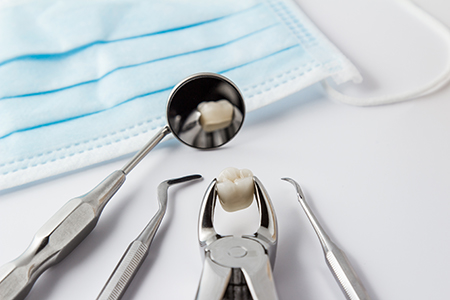
Losing a tooth affects more than just the visible smile; it changes how forces are distributed across the mouth and can lead to gradual bone loss in the area if the missing tooth is not replaced. After extraction, we discuss appropriate replacement strategies that match your health, goals, and timing.
Common replacement options include removable dentures, fixed dental bridges, and dental implants. Each option has distinct benefits: a denture can replace several teeth, a bridge can restore adjacent teeth when suitable support exists, and implants recreate a tooth root to help preserve bone and provide a strong foundation for a replacement tooth.
We also consider strategies to preserve bone at the time of extraction—such as ridge preservation techniques—when appropriate. Taking steps early can simplify future restorative work and improve long-term esthetic and functional outcomes.
At Tates Creek Dental, our focus is on delivering safe, evidence-based care that responds to each patient’s needs. We combine clinical experience with modern diagnostic tools to develop treatment plans that prioritize comfort, predictable outcomes, and long-term oral health.
Throughout the process—from initial evaluation to post-operative follow-up—we communicate clearly about what to expect and involve you in decisions about replacements and next steps. If your case would benefit from a specialist’s involvement, we coordinate referrals to ensure you receive the appropriate level of care.
Our team is committed to treating patients with compassion and respect, managing pain and anxiety when needed, and planning restorative solutions that help you regain function and confidence in your smile.
In summary, extractions are sometimes the most responsible option for protecting oral health. We aim to make the process as predictable and comfortable as possible and to provide clear guidance about healing and tooth replacement. If you have questions about whether an extraction is right for you or want to learn more about treatment and recovery, please contact us for more information.
Removing a tooth is considered only after conservative, restorative options have been evaluated and ruled out. Extractions become necessary when a tooth threatens the health of neighboring teeth, the gums, or the supporting bone, or when the tooth is too damaged to be predictably restored. The primary goals of extraction are to eliminate pain or infection and to protect overall oral health.
Common clinical scenarios that lead to extraction include advanced decay that compromises structural integrity, fractures that extend below the gumline, severe periodontal disease with lost support, impacted wisdom teeth, and retained primary teeth that block permanent tooth eruption. Extractions may also be planned as part of orthodontic treatment to create space for proper alignment. In every case, your dentist will explain why extraction is recommended and outline alternative treatments when appropriate.
A simple extraction is performed when the tooth is fully erupted and accessible in the mouth; it typically requires only local anesthesia and the use of elevators and forceps to gently loosen and remove the tooth. The procedure is often quick and aims to minimize trauma to surrounding tissues while preserving bone for future restorative options. Recovery from a simple extraction is generally straightforward when post-operative instructions are followed.
Surgical extraction is required when a tooth is broken at the gumline, impacted under the bone, or has roots that are curved or fused and cannot be removed intact with forceps. This approach may involve a small gum incision and, in some cases, removal of a modest amount of bone to access the tooth, and stitches are sometimes used to close the site. Complex cases that carry additional risk may be referred to an oral and maxillofacial surgeon for specialized care.
Before an extraction, your dental team will review your medical and dental history, current medications, and any conditions that could affect healing or anesthesia choices. It is important to disclose blood thinners, heart conditions, diabetes, recent illnesses, and any allergies so the team can tailor the treatment and coordinate with your physician if needed. Follow any preoperative instructions provided by the office, including fasting requirements if sedation has been planned.
If you expect to receive sedation beyond local anesthesia, arrange for a responsible adult to drive you home and supervise you for the remainder of the day. Plan to wear comfortable clothing and avoid heavy meals or alcohol before the procedure if advised by the clinician. Bringing a list of questions and a summary of your medications will help ensure the visit proceeds smoothly and that you feel informed about the process.
Local anesthesia is used routinely to numb the extraction site and provide pain control during the procedure, allowing most patients to remain comfortable and aware. For patients with dental anxiety or when multiple or complex extractions are planned, additional options such as nitrous oxide (laughing gas), oral sedation, or intravenous (IV) sedation may be offered to increase comfort and reduce stress. The choice of sedation depends on the complexity of the case, your medical history, and your comfort level.
The dental team will discuss the risks and benefits of each option and provide pre-procedure instructions tailored to the selected anesthesia, including fasting when required and medication adjustments. Continuous monitoring during sedation ensures your safety, and recovery instructions will be provided so you understand how to care for yourself afterward. If specialized sedation is needed, your case may be coordinated with a sedation-trained clinician or facility.
After the area is numbed with local anesthesia, a simple extraction involves gently loosening the tooth and removing it with forceps while taking care to preserve surrounding bone and soft tissues. Surgical extractions may require a small incision, removal of a bit of bone, or sectioning the tooth into pieces for safe removal, and sutures may be placed to aid healing. Throughout the procedure the dental team will monitor your comfort and breathing, and will explain each step so you know what to expect.
Procedure length varies by case complexity but most routine extractions are completed within a relatively short appointment, while more complex surgical removals can take longer. After the tooth is removed, the clinician will place gauze to support clot formation and give specific post-operative instructions for bleeding control, pain management, and activity restrictions. If follow-up care or referrals are necessary, those arrangements will be made before you leave the office.
Most extractions heal without major issues, but potential complications include prolonged bleeding, infection, delayed healing, and the painful condition known as dry socket if the blood clot is dislodged. Nerve injury is an uncommon but possible complication with some lower wisdom tooth extractions and may cause temporary altered sensation in the lip, chin, or tongue. The dental team will review specific risks related to your case and give guidance on signs that warrant prompt evaluation.
Knowing what to watch for helps ensure timely care: increasing or severe pain after the first few days, persistent heavy bleeding, fever, or swelling that worsens are reasons to contact the office. If antibiotics or other medications are prescribed, follow the directions carefully to reduce the chance of infection. Your dentist may also schedule follow-up visits to confirm normal healing and address any concerns as they arise.
Protecting the blood clot that forms in the socket is critical to uncomplicated healing, so avoid vigorous rinsing, spitting, using straws, or smoking for the first 24 to 72 hours after extraction. Follow instructions about keeping firm pressure on the gauze for the recommended period, taking pain medication before severe discomfort begins, and using cold therapy during the first 24 hours to manage swelling. Eating soft, cool to lukewarm foods and maintaining gentle oral hygiene away from the site will also support recovery.
After 24 hours you can rinse gently with a warm saltwater solution as directed to keep the area clean without disrupting the clot. If a dry socket develops, your dentist can provide targeted in-office treatments to manage pain and promote healing. Prompt communication with your dental team about any unusual pain or symptoms helps ensure timely intervention and better outcomes.
Replacing a missing tooth is recommended in many cases to restore chewing function, maintain proper tooth alignment, and help preserve the underlying bone. Common replacement options include removable partial dentures for replacing several teeth, fixed dental bridges when adjacent teeth can support the restoration, and dental implants that replace the tooth root and help maintain bone over the long term. Your dentist will discuss which options are appropriate based on oral health, bone availability, and your personal goals.
The timing of replacement varies: some options can be planned soon after healing, while implant therapy may require a staged approach that includes bone preservation or grafting when needed. Your clinician will explain the restorative pathway that best supports function and esthetics and will coordinate treatment steps so the replacement fits into your overall oral health plan. Long-term maintenance and routine follow-up play an important role in the success of any restorative solution.
Yes. In many cases the dentist can perform socket preservation or ridge preservation at the time of extraction to maintain the volume and shape of the jawbone where a tooth was removed. These procedures commonly involve placing bone graft material and, when indicated, a resorbable membrane to support new bone formation and reduce the degree of bone resorption that naturally follows tooth loss. Preserving bone at the time of extraction can simplify future restorative options, particularly dental implant placement.
The decision to perform a preservation procedure depends on factors such as the condition of the surrounding bone, infection at the site, and your long-term restorative goals. Your dentist will review the benefits and healing expectations, explain any additional steps required, and incorporate socket preservation into a coordinated treatment plan when appropriate. Close follow-up allows the team to monitor healing and schedule subsequent restorative phases at the optimal time.
Children may need extractions for retained primary teeth that block eruption of permanent teeth, for severely decayed teeth that cannot be restored, or after dental trauma that leaves a tooth nonviable. The timing balances the child’s developmental stage, space needs for permanent teeth, and overall oral health, and the dentist will recommend extraction only when it supports the child’s long-term dental development. Behavior management techniques and family-centered communication are important elements of pediatric dental care.
Pediatric extractions are performed with attention to comfort, safety, and minimizing anxiety; options range from local anesthesia and distraction techniques to nitrous oxide or oral sedation when appropriate and safe for the child. Parents are given clear pre- and post-operative instructions and encouraged to contact the office with any concerns about healing, pain, or behavior changes. Many families in Lexington and the surrounding area choose Tates Creek Dental for this type of coordinated pediatric care because of our experience with children and emphasis on gentle, evidence-based treatment.
For 25 years, we've been proud to care for smiles in this community — combining modern technology with a personal touch, and always making room for patients who need us quickly. We're grateful for the trust you place in our office.